
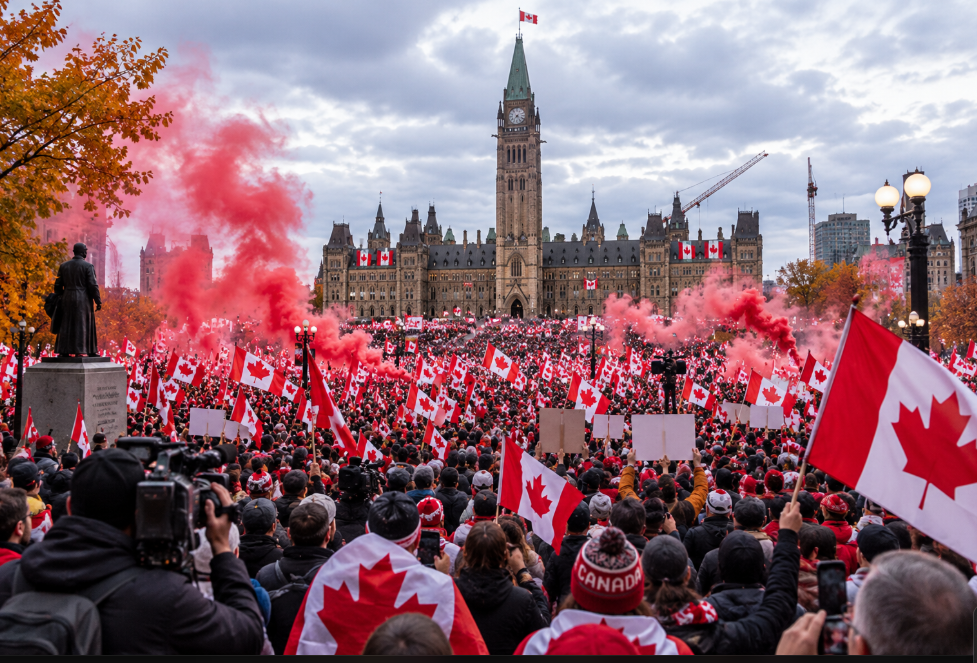
This is an editorial scenario, not a report of a specific incident. Imagine that a broadcast has ended, but a camera continues to show part of a public square. The formal programme has disappeared from the screen; people moving equipment and collecting signs are still visible.
Attention is not an explanation
An off-air image might attract interest because it reveals a part of the day viewers rarely see. It does not, by itself, explain the work being done. Someone carrying a barrier could be setting it up, moving it under instruction or returning it. A caption should not fill that gap with a dramatic assumption.
For a publication interested in what follows an event, the useful question is practical: what is the agreed handover? That answer would come from the responsible people and the relevant record, not from the expression of a person in a still image.
Look for the missing context
Before drawing a conclusion, ask when the sequence was recorded, what came before it and whether the person sharing it knows its source. Keep the visible action separate from any proposed explanation. If the sequence is incomplete, say so.
The wider lesson is that work can remain visible after a programme ends. Visibility gives us something to ask about; it does not provide a complete account of the event.
General information and editorial perspectives. For a specific service, venue or arrangement, check with the responsible organization. Send a question or correction.